Why clean data is a long-term system, not a one-time fix
Clean data isn’t something you fix once. It’s a system that requires consistent decisions, ongoing maintenance, and workflows designed for change.

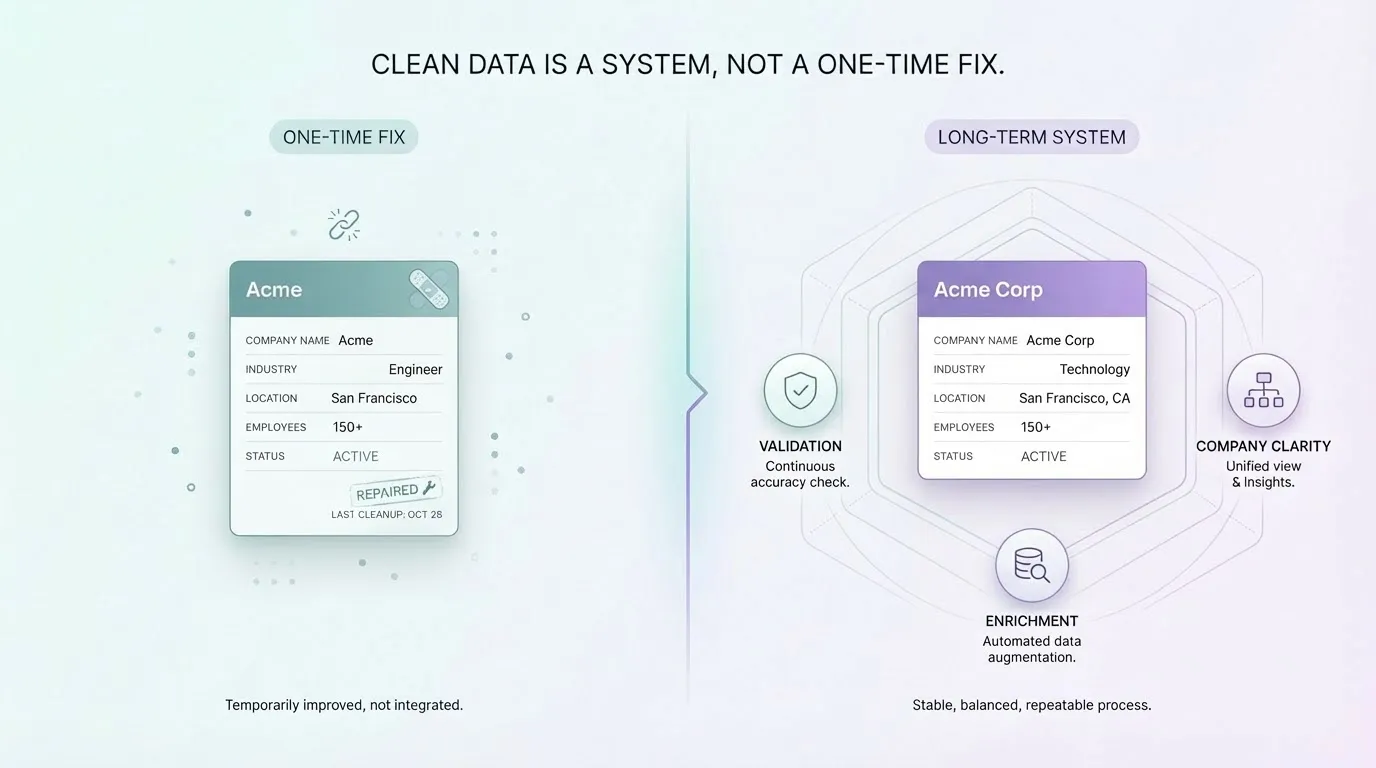
Clean data is often treated as a project.
A migration. A cleanup sprint. A one-time effort to fix what’s broken.
And for a short while, it works.
Dashboards look better. Duplicates disappear. Reports feel more trustworthy.
But over time, the same problems return.
Records drift. New inconsistencies appear. Confidence in data slowly fades again.
That’s because clean data is not a finish line. It’s a system.
One of the most important control points is what enters your system in the first place.
Without clear validation rules, inconsistent data continues to flow in and becomes harder to correct over time.
Why one-time cleanups don’t last
Most data issues are not caused by bad intentions or bad tools.
They are caused by change.
Companies evolve. Domains change. New data sources are added. Different teams interact with the same records in different ways.
A one-time cleanup can fix the current state of your database. It cannot control what happens next.
Without clear rules and consistent decisions, new data enters with the same uncertainty as before.
Over time, the database drifts back into an unhealthy state.
Clean data depends on consistent decisions
At the core of every clean data system is a simple idea.
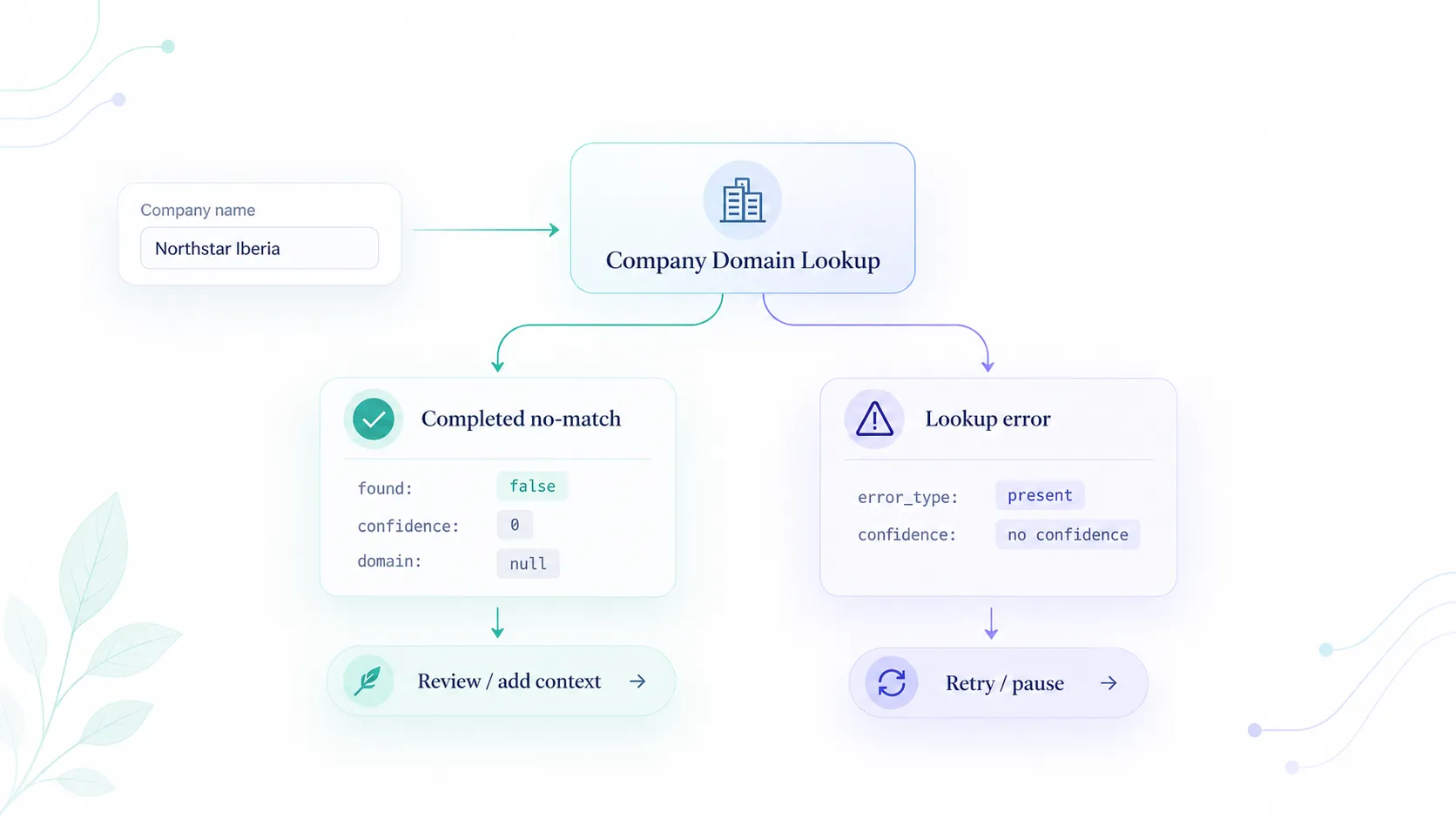
Decisions should not change every time data flows through the system. This is why email validation works best when it produces consistent outcomes instead of raw signals.
Whether data is:
- accepted
- rejected
- reviewed
those outcomes should follow the same logic everywhere.
When decisions are inconsistent:
- duplicates multiply
- enrichment is applied unevenly
- reports lose credibility
Clean data systems reduce ambiguity by making rules explicit and repeatable.
Data systems need maintenance, not just fixes
Living systems require care.
Data behaves the same way.
New records are added every day. Existing records change. External signals shift.
Without ongoing validation, normalization, and enrichment, even well-structured data degrades over time.
Maintenance does not mean constant cleanup. It means reinforcing the same decisions at every entry point.
Validation, enrichment, and clarity work together
Clean data systems are built from connected layers.
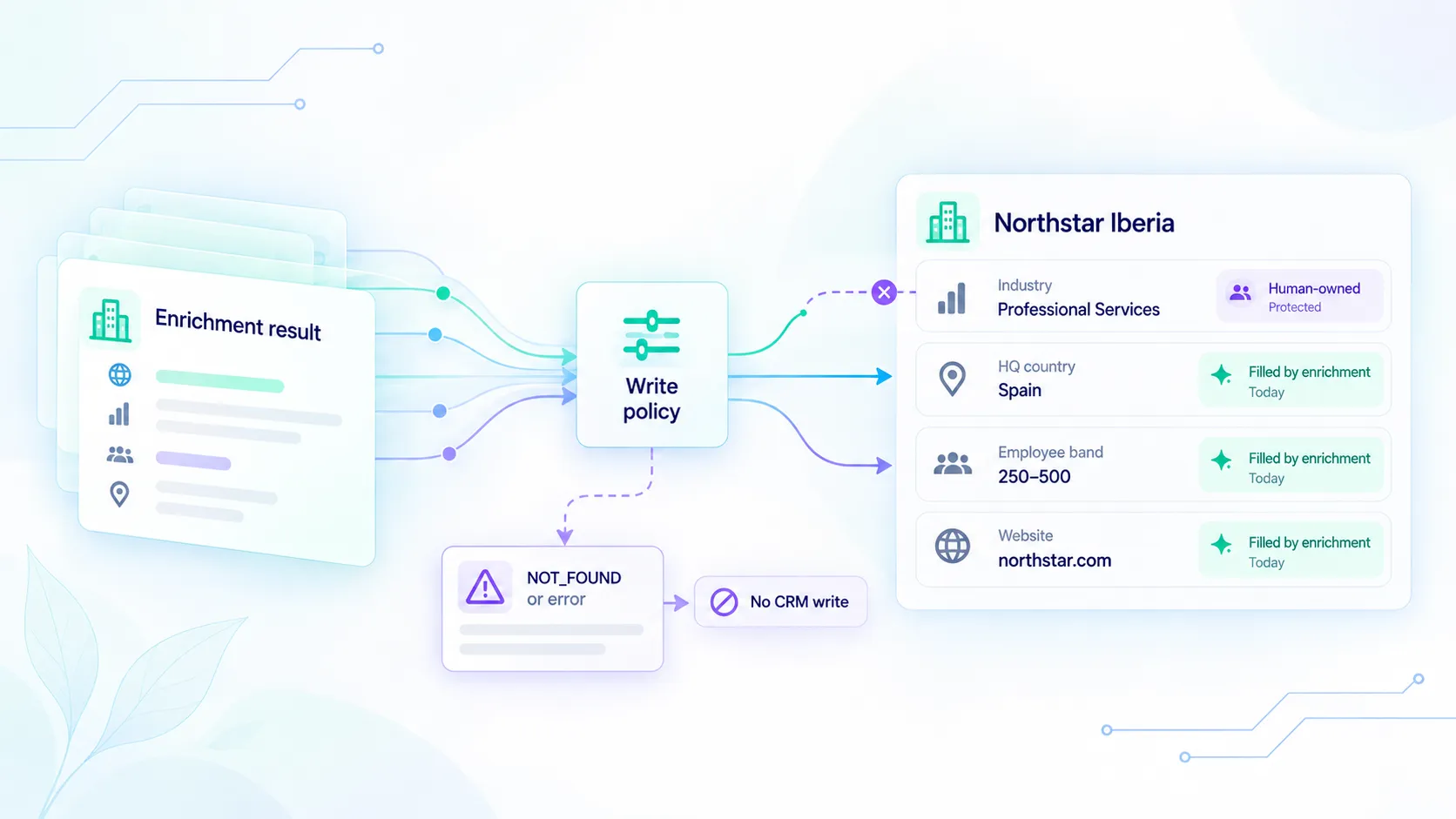
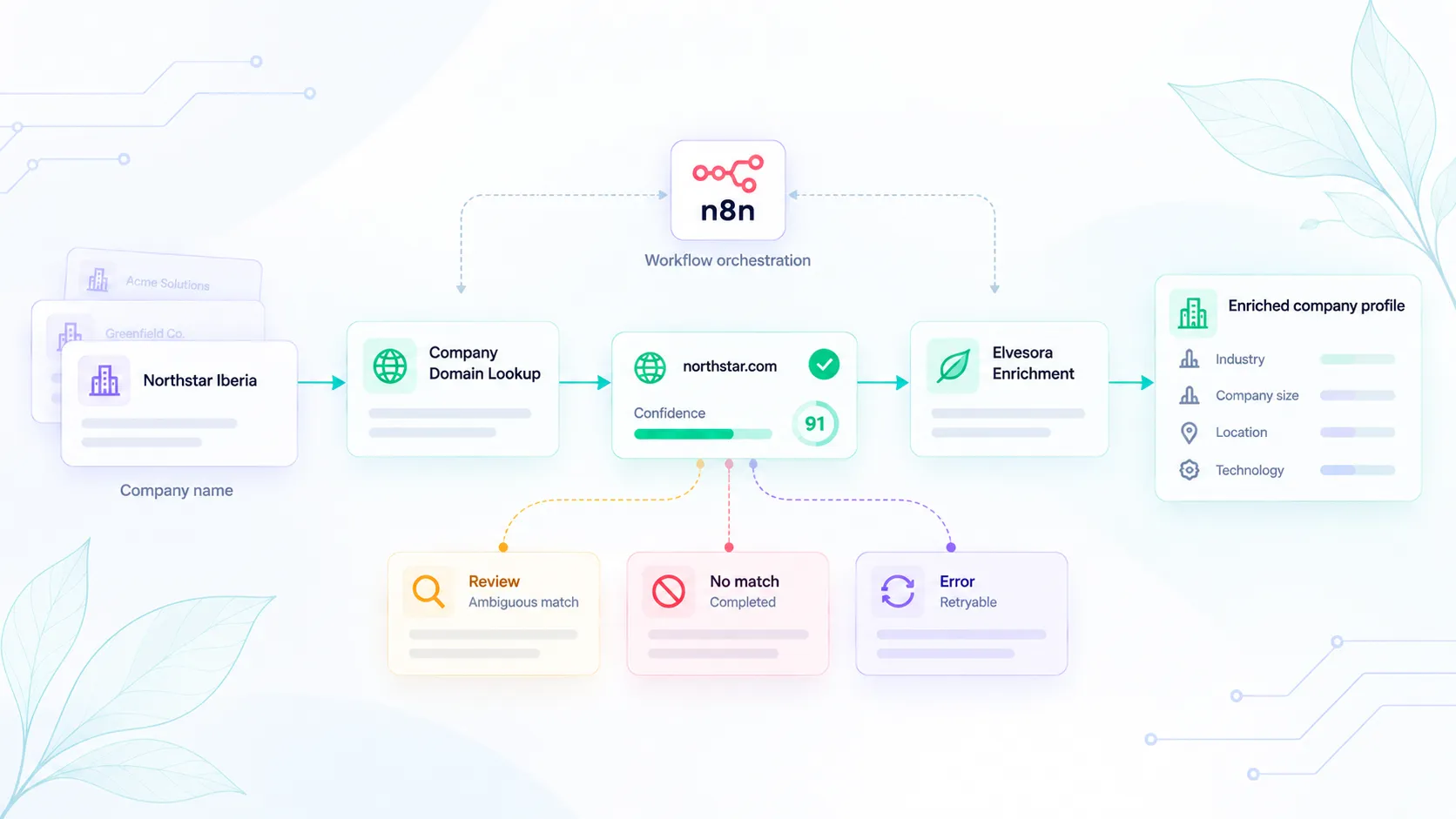
Validation controls what enters. Enrichment adds missing context. Company enrichment helps complete business records with firmographic and contextual data that makes systems easier to understand and maintain.
When these layers operate independently, gaps appear.
When they work together under shared rules, data stays usable longer.
The goal is not to add more data. The goal is to keep existing records accurate, complete, and understandable as systems grow.
Why clean data is a long-term advantage
Teams with sustainable data systems spend less time reacting.
They trust their dashboards. They move faster on decisions. They avoid repeated cleanup cycles.
Most importantly, they build workflows that scale without constantly breaking.
Clean data becomes an operational advantage, not a recurring problem.
Final thoughts
Clean data is not something you achieve once.
It’s something you maintain through clear rules, consistent decisions, and systems designed for change.
When data is treated as a living system, it stays useful.
Not just today, but over time.